

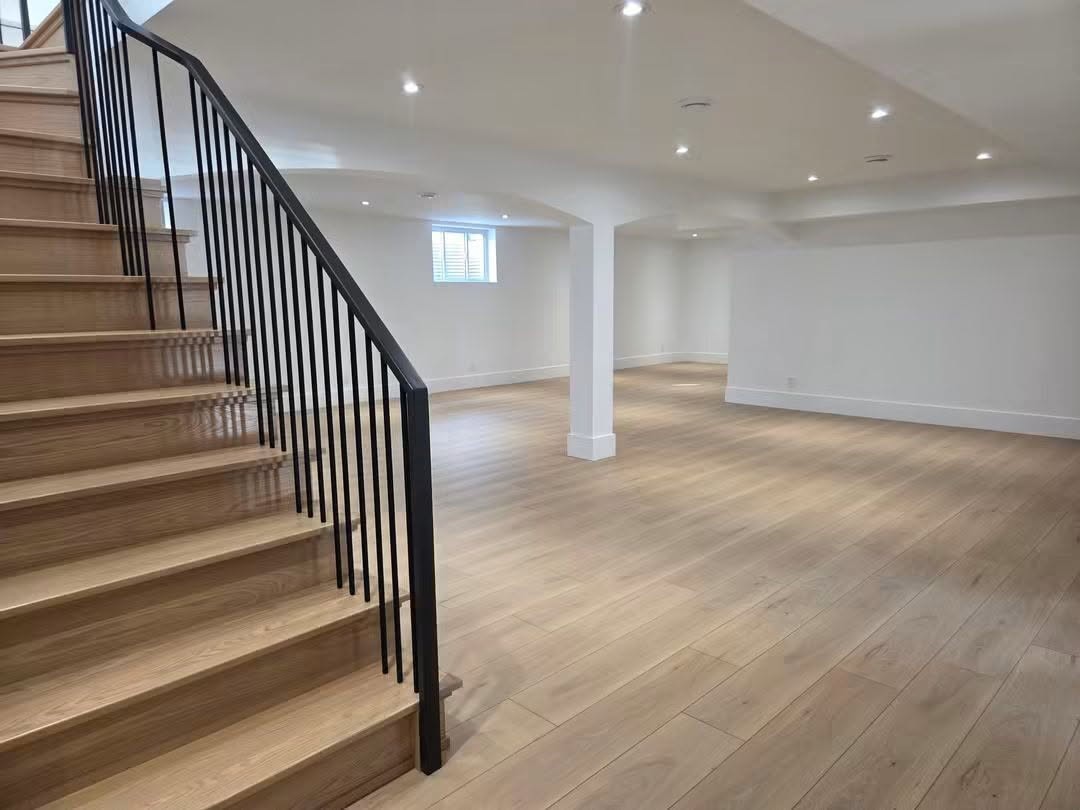
Basement remodels across Douglassville deliver valuable square footage for guest suites, home gyms, or family media rooms. Modern waterproof laminate gives you the warmth and visual texture of authentic hardwood with tough surface defenses against everyday household spills. Foundation slabs beneath ground level, however, face physical forces that never reach upper floors. A concrete subfloor rests directly against surrounding soil, pulling in sub-surface moisture, seasonal ground chill, and fine sediment common throughout Berks County river valleys.
Topical board waterproofing protects against tipped beverage cups, pet bowls, and slush tracked down the stairs. That surface shield cannot stop vapor emissions working upward through your foundation. Long-term performance depends on thorough subfloor inspection, aggressive concrete leveling, and vapor remediation before laying the first row of boards.
Berks County Climate and Basement Moisture Dynamics
Southeastern Pennsylvania experiences freezing winter ground freezes followed by humid summers and heavy spring cloudbursts. Snowmelt and seasonal rain raise groundwater levels across the Schuylkill basin, producing hydrostatic pressure against foundation walls and basement footings. Poured concrete looks dense, but microscopic capillary networks allow moisture to migrate upward toward dry indoor air. Slabs that feel dry to your touch can release multiple pounds of water vapor across a single room over twenty-four hours.
Trapping constant vapor directly beneath floating floor planks without adequate barriers leads to mold growth, musty odors, and damaged core edges. Accurate testing reveals actual foundation moisture levels before you purchase materials.
Subfloor Evaluation Benchmarks
Concrete assessment relies on several critical diagnostic checks:
Relative humidity testing using in-slab probes to calculate internal moisture levels
Calcium chloride tests across the room perimeter to record vapor emissions
Surface pH testing to confirm compatible bonding with sealers and levelers
Visual checks for white efflorescence powder along low points and joints
Slab Leveling and Surface Preparation Standards
Click-lock joints require a flat base to lock securely. Low spots create hollow gaps beneath boards, while high spots act as fulcrums when you walk across the floor. That repeated deflection places excessive stress on the interlocking profile, resulting in cracked edges, squeaking boards, and visible joint separation over time.
Floating floor specifications typically demand a surface variation under 3/16 inch across a ten-foot span. Reaching this standard involves mechanical concrete grinding on raised seams, patching settling cracks, and pouring self-leveling cement compounds into wide dips. Arranging an in-home flooring estimate gives you an accurate assessment of foundation elevation changes and subfloor remediation requirements.
Core Steps for Foundation Preparation
Completing a successful subfloor preparation sequence includes these key phases:
Scrape away adhesive residues, dried paint, joint compound, and dust
Grind down high control joints and ridged trowel marks
Repair fissures and deep craters using polymer-modified patching compound
Apply concrete primer and pour self-leveling underlayment to smooth shallow valleys
Vacuum the cured concrete to eliminate gritty particles that interfere with underlayment
Vapor Barriers and Thermal Underlayment Selection
Plank cores prevent damage from spills on top, but the bottom side needs an impermeable shield against subterranean dampness. A 6-mil virgin polyethylene sheet acts as your primary vapor barrier, installed with an eight-inch seam overlap and sealed with moisture-resistant tape. Rising vapor meets this poly barrier and safely disperses toward perimeter relief channels instead of degrading your floor joints.
Basement slabs also sap heat out of finished living areas through cold Pennsylvania winters. Choosing high-density underlayment pads with high thermal resistance ratings insulates your room, reduces sound transfer, and makes your basement floor feel warmer underfoot. Scheduling certified flooring installation ensures proper perimeter expansion margins, airtight membrane seals, and secure transitions across every doorway.
Visit Our Local Showroom
Examining floor samples in natural light helps you select the best plank style, texture, and board thickness for your remodel. Visit our Douglassville showroom on Maplewood Drive or our Wyomissing showroom on Berkshire Boulevard to inspect full displays, review waterproof core constructions, and touch authentic embossed grain textures. Our design team can guide you through durable plank selections and help plan subfloor testing tailored to your basement layout.
About Us
About All Floors is a family-owned flooring retailer serving Douglassville, Wyomissing, and surrounding Berks County communities. Our team provides attentive personal service, expert room evaluations, and dependable installation across a broad catalog of carpet, hardwood, luxury vinyl, tile, and waterproof laminate. Read more details about our family background on our about us page, or visit our showrooms to get your basement flooring project started.


