
Summer humidity in Berks and Montgomery counties changes how hardwood floors behave. That intense seasonal moisture forces wood planks to swell, putting constant physical stress on the finish.
When you combine that expansion with the abrasive winter road salt tracked in months earlier from driveways in Pottstown or Sinking Spring, the protective topcoat takes a beating.
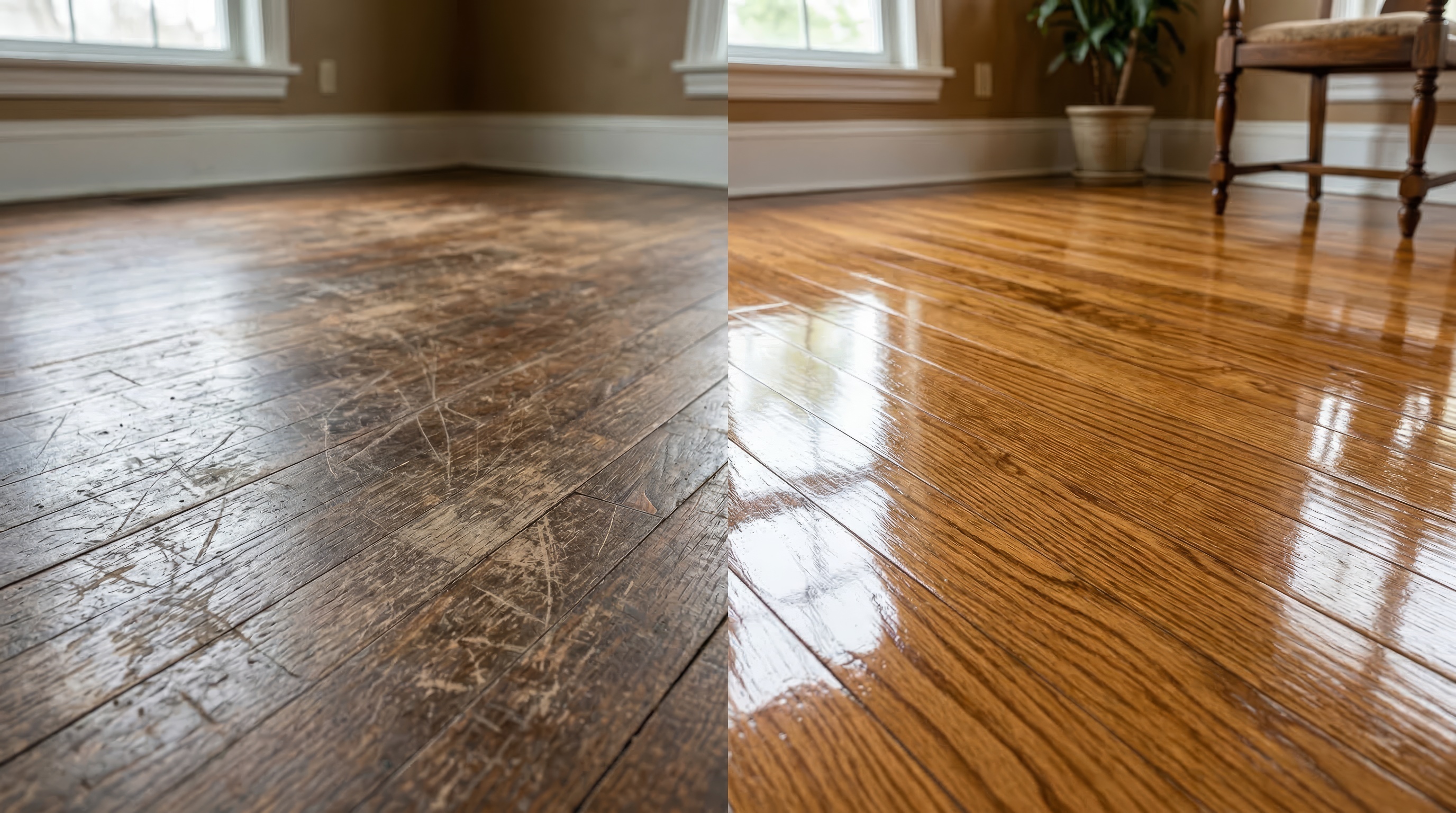
Over time, beautiful hardwood loses its luster. It starts looking dull, hazy, or tired in the main traffic lanes connecting your kitchen and living spaces.
Restoring that original beauty depends entirely on what is causing the dullness. Before spending money on temporary fixes, you need to know exactly what is happening to the surface.
The Danger of Grocery Store Quick Fixes
A sudden loss of gloss makes it tempting to grab a bottle of liquid restorer or oil soap from the supermarket shelf.
These products promise an instant shine, but they frequently cause long-term damage. Most retail shine restorers rely on acrylic or silicone bases. They lay down a temporary glossy film that traps micro-particles of dirt underneath. Within a few weeks, that film scratches, turns cloudy, and creates a stubborn, sticky residue.
Once that buildup occurs, standard cleaning will not remove it. You are left with a hazy layer that highlights footprints and dust. True restoration focuses on revealing the wood, not burying it under chemical layers.
Step 1: The Water Droplet Test
Before deciding how to address the problem, you must determine if the protective finish is simply dirty or completely worn away. You can perform a quick diagnostic test on the dullest area of your floor using a few drops of water.
The Water Beads Up: If the water forms distinct droplets on the surface, your polyurethane finish is still intact. The dullness is caused by surface dirt, oil buildup, or old cleaning residue. You can fix this with a targeted deep clean.
The Water Soaks In: If the wood absorbs the water within a couple of minutes and turns dark, the protective finish has worn through completely. The raw wood fibers are exposed to the elements, meaning cleaning will not solve the issue.
Step 2: Clearing Surface Haze
If your finish passes the water test, the dull look usually comes from accumulated residue. Daily life in busy Amity Township households means cooking oils, pet dander, and incorrect cleaners leave a fine film over the floor.
To safely remove this buildup, stop using specialized oil soaps or harsh chemicals. Instead, use a wood-safe, pH-neutral cleaner and a microfiber mop that is only slightly damp. Excess water is the enemy of hardwood, especially during humid summer months. Clean the room in small sections, wiping with the grain of the wood. If a stubborn film persists, a professional deep-cleaning service can safely strip away old product buildup without damaging the wood underneath.
Evaluating the Next Steps: Refinishing, Repair, or Replacement
When the finish fails the water test, or when deep scratches cut entirely through the stain into raw wood, the floor is vulnerable to warping and permanent moisture damage. At this stage, you face a choice between restoring the existing wood or starting fresh.
Restoring Character With Sand and Stain Services
If you have classic solid hardwood floors or high-quality engineered wood with a thick veneer, you do not necessarily need a brand-new floor. Professional sand, stain, and refinish services can completely erase years of high-traffic wear, surface scratches, and seasonal humidity haze. Our crew sands away the damaged top coat, applies a fresh stain color of your choice, and seals the wood with a durable protective finish. This process restores the original luster and allows you to completely update the color trend of your home without the cost of a full tear-out.
Assessing Targeted Board Repairs
Sometimes the dullness and damage are isolated to a specific area, like an entryway where winter road salt sat too long, or a kitchen path prone to spills. If the rest of the room looks excellent, an experienced installer can perform targeted repairs by replacing only the damaged planks and blending them into the layout.
Considering Modern Upgrades
For floors experiencing structural failure, widespread water damage, or wood that has already been sanded down too many times in the past, replacing the surface becomes the smart long-term path. Flooring technology has shifted drastically over the last decade. Upgrading to premium engineered hardwood or high-performance luxury vinyl planks gives you the exact look of natural wood with vastly superior resistance to scratches and moisture, easily handling the seasonal humidity spikes common in our region.
Find the Right Solution for Your Worn Hardwood Planks
Determining whether your wood floors need a deep clean, a full refinishing job, or a complete replacement is much easier with an expert opinion. A dedicated project specialist can accurately diagnose the depth of the damage and lay out your practical options, keeping your home style and budget in mind.
You can speak directly with a specialist at our storefront on Maplewood Drive, visit our showroom on Berkshire Boulevard, or contact us to evaluate your floors. Our team will look at the specific condition of your wood, offer honest advice on what makes the most sense for your space, and help you plan the next steps without any high-pressure sales tactics.


