

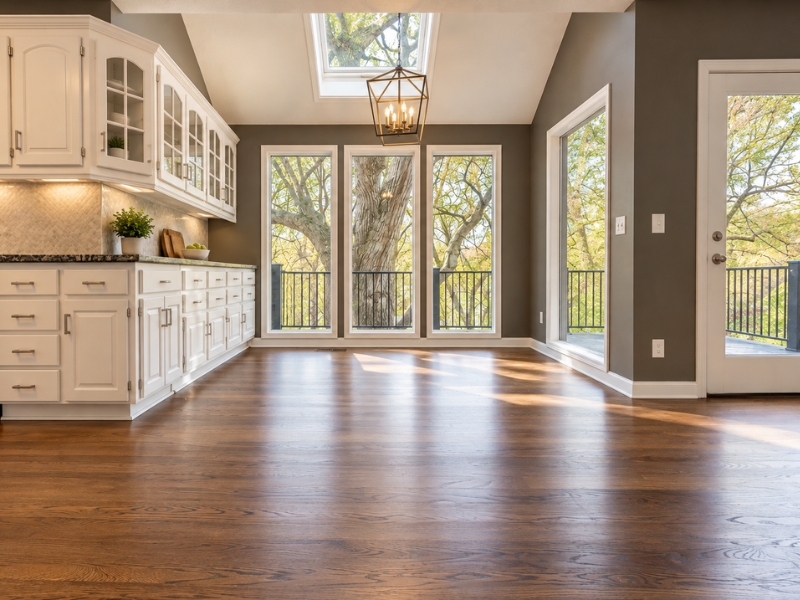
Solid timber floors bring timeless character to Berks County homes, yet active family life leaves visible marks over time. Heavy furniture shifts, trapped driveway gravel, and large family pets can gouge past the surface finish straight into the raw wood fibers. When damage cuts deep into your floorboards, you face a practical decision between sanding down the entire room or taking out only the compromised pieces.
The best path forward depends on the physical anatomy of your planks, their structural wear layer, and the exact concentration of the scratches. Historic stone properties in Wyomissing and newer family builds in Douglassville feature different subfloor systems and milling profiles that dictate whether targeted carpentry or complete surface restoration yields the strongest, most balanced result.
At a Glance: Refinishing vs. Board Replacement
- Surface wear across broad walk paths calls for a complete sanding cycle to restore sheen, remove discoloration, and ensure unified stain coverage across the room.
- Deep gouges isolated to a small area benefit from cutting out individual planks to save your remaining wear layer elsewhere.
- Engineered planks with thin veneers often cannot endure deep sanding and need plank replacement instead.
- Structural cracks, water swelling around entryways, or splintered tongue-and-groove joints always demand board replacement.
Plank Anatomy and Scratch Severity
Wood planks consist of distinct structural zones that govern how they respond to damage. A traditional solid timber board measures three-quarters of an inch thick, but you cannot sand away that entire depth. The usable timber sits entirely above the horizontal tongue-and-groove milling line, giving you roughly a quarter-inch wear layer to work with across the lifetime of the floor.
Engineered timber planks feature an upper hardwood lamella bonded directly onto high-density fiberboard or cross-grained plywood plies. When a scratch breaches that genuine top wood layer, it exposes the inner plywood core underneath. Evaluating the real depth of floor damage protects the structural stability of your floorboards before work begins.
Surface Scuffs Versus Core Breaches
Light surface scratches simply cloud the factory polyurethane or oil protective coat. You can spot these easily: they look dull when ambient light hits them, but running a fingernail across the line reveals no sharp crevice, and the bare wood beneath shows no discoloration. These superficial scuffs do not need new lumber or aggressive mechanical sanding.
Deep scratches tell an entirely different story. Sharp stone edges tracked in from winter driveways or unpadded metal chair legs can cleave deep past the finish and crush the cellular structure of the wood grain. If your fingernail drops hard into the groove, or if the crevice has turned black from trapped moisture during wet spring cycles, the scratch has compromised the interior wood structure.
When Full Room Sanding Restores Your Surfaces
Widespread surface distress spread across main entry halls, living areas, or kitchen corridors points toward complete surface renewal. Scheduling hardwood floor refinishing gives you a clean slate by taking down the top micro-layer of wood across the entire space at an even, mechanical depth.
This complete renewal method works best under specific floor conditions:
- Solid wood planks that retain ample thickness above their mechanical tongues and fasteners.
- Homes with extensive pet traffic marks, widespread sun fading, or faded traffic lanes between connecting rooms.
- Situations where you want to alter your room color palette with fresh stain tones.
Sanding the entire room levels out minor indentations, cleans out years of gray oxidation, and applies a brand-new protective barrier against everyday foot traffic. It delivers a balanced visual sheen that isolated repairs cannot match across large open layouts.
When Replacing Individual Boards Makes Better Sense
Aggressive sanding removes good wood needlessly if deep damage concentrates on just two or three boards. Grinding down an entire floor just to reach the bottom of one isolated, gouged plank shortens the total lifespan of every unaffected board in the room. In these cases, targeted board replacement preserves your investment.
Plank replacement proves the superior option when dealing with:
- Sharp scratches that penetrate halfway through the plank thickness near a single doorway or corner.
- Engineered floors with thin surface lamellas that cannot withstand drum sanders.
- Boards that show split ends, fractured tongues, or localized swelling from winter moisture buildup.
During this precision repair, experienced technicians slice down the center of the broken board, relieve structural perimeter tension, and extract the damaged timber without marring surrounding pieces. A replacement board is then milled to drop cleanly into place, locked down, and blended into the surrounding pattern.
Matching Species, Grains, and Patina
Replacing individual boards requires precise material matching. Fresh lumber straight from a mill rarely matches the natural warmth of boards that have lived in your home for ten or twenty years. Natural light exposure alters wood tones, creating an aged patina that standard off-the-shelf planks cannot replicate instantly.
You must also match the exact grain orientation and tree species. Red oak displays open pores and wild flame figuring, while white oak exhibits tighter grain and distinctive medullary rays. Relying on premium hardwood flooring planks cut to your home's exact dimensions prevents new pieces from looking like obvious patches.
Evaluate Your Floors with About All Floors
Whether your home calls for targeted board surgery or an entire room refresh, practical advice keeps your floors resilient for decades. Our family team helps you assess board thickness, grain species, and structural wear to recommend the most cost-effective path forward.
Visit our Douglassville showroom on Maplewood Drive or our Wyomissing showroom on Berkshire Boulevard to inspect plank profiles, compare timber samples, and schedule your free in-home flooring estimate. Our team provides full flooring services across Berks County to keep your home looking its best.


