

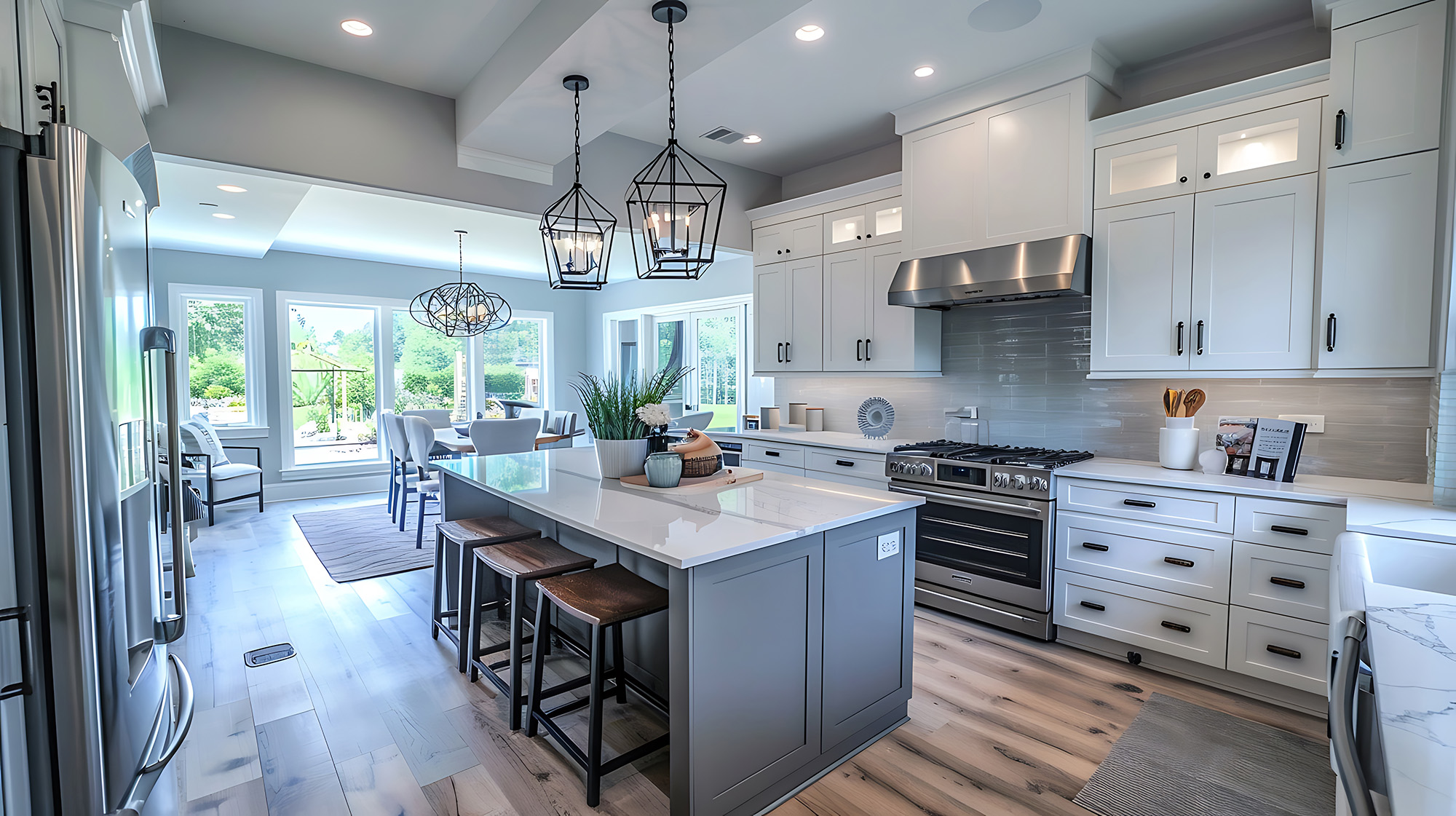
Summer humidity in Berks and Montgomery counties brings heavy moisture challenges to residential floors. Every day spills, muddy paws in Pottstown mudrooms, and ground dampness in Amity Township basements test the limits of wood-look surfaces.
Waterproof laminate promises total protection, but understanding how it actually handles moisture demands a close look at how liquids interact with the material from both directions.
Decoding Top-Down and Bottom-Up Moisture Performance
Evaluating whether laminate is truly waterproof means examining two distinct moisture pathways: surface spills coming from above and subfloor dampness rising from below.
Top-Down Protection: Spills and Slush
Surface moisture happens daily in busy suburban households. Spilled drinks, pet bowls, and melting winter slush tracked in from driveways in Birdsboro sit on top of the floor until cleaned. Modern waterproof laminate handles these top-down incidents effectively because manufacturers press resin-sealed protective wear layers over a high-density fiberboard core. This tight surface barrier prevents liquids from seeping into the seams for hours, giving busy families time to wipe up messes without panic.
But, laminate is not ceramic tile.
While the surface repels standing water successfully, leaving puddles overnight or letting moisture pool along unprotected edges can eventually compromise the core boards.
Bottom-Up Vapor: Subfloor and Slab Realities
The hidden threat to any flooring material comes from beneath the surface. Many homes throughout Sinking Spring and newer regional developments sit on concrete slabs or feature traditional basements. Concrete naturally retains ground moisture, releasing water vapor upward into the subfloor day after day.
Standard laminate reacts violently to this bottom-up pressure, warping and buckling as humidity builds beneath the planks. Waterproof laminate features treated, moisture-resistant cores designed to withstand moderate subfloor humidity without swelling.
Even with this advanced core technology, extreme subfloor moisture calls for proper vapor testing and specialized underlayments before installation begins. This careful subfloor preparation prevents trapped vapor from ruining the investment from the bottom up.
Choosing the Right Waterproof Surface for Your Home Layout
Deciding if waterproof laminate fits your specific space depends on balancing your household layout with your daily routine. Open-concept suburban homes experience continuous foot traffic connecting kitchens, living areas, and entryways. Laminate provides a rigid, stable surface that resists heavy foot traffic and pet scratches while maintaining a warm underfoot feel that mimics solid hardwood.
While luxury vinyl represents another waterproof alternative on the market, our project specialists help you compare the distinct structural feel, acoustic properties, and aesthetic depth of laminate directly against other materials. This side-by-side evaluation ensures you choose the exact surface that matches your lifestyle.
Precision Installation for Long-Term Protection
Even the highest-grade waterproof laminate relies heavily on correct installation execution. This professional placement process ensures that perimeter expansion gaps are measured accurately and sealed against unexpected moisture intrusion. Expert installers lock every plank tightly to eliminate micro-gaps where water could sneak beneath the surface. This careful execution turns a quality material into a long-lasting household feature.
Find the Ideal Waterproof Flooring for Your Home
Determining whether waterproof laminate fits your home layout is much easier with an expert opinion. A dedicated project specialist can review your subfloor conditions, assess your daily household traffic, and lay out your practical options.
You can speak directly with a specialist at our Douglassville storefront on Maplewood Drive, visit our Wyomissing showroom on Berkshire Boulevard, or contact us. Our team will look at the specific layout of your space, offer honest advice on material performance, and help you plan your next steps without any high-pressure sales tactics.


